
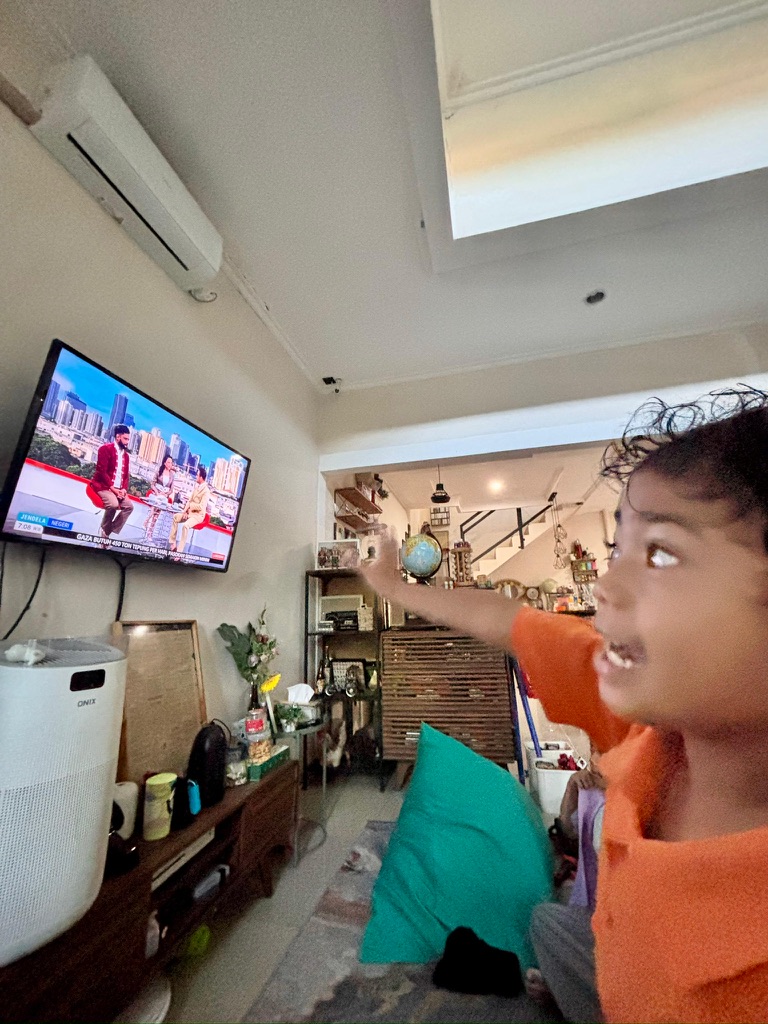
Last Tuesday, I had the pleasure of visiting the TVRI studio to join the “Jendela Negeri” program, hosted by Shira Theresia and Sammy Bastian. The theme was incredibly close to my heart: Creative Economy for Village Independence. As a researcher in Economics, Industry, Trade, and Services at BRIN, I’ve seen firsthand how creativity isn’t just a “nice-to-have” feature—it is a strategic survival tool for our rural areas. We discussed how local potential can be transformed into high-value products that allow villages to stand on their own feet without relying solely on urban industries.












The session kicked off with a fascinating look at Maros, South Sulawesi, where the community has turned butterfly conservation into a thriving souvenir industry. It’s a perfect example of what I call an “inclusive economy.” You don’t need a fancy PhD or a massive factory to start; you just need to look at what’s around you—in this case, butterflies that have naturally passed away—and add a touch of craftsmanship. This is why the creative sector is a game-changer for reducing regional gaps; it empowers people regardless of their age, gender, or formal education level.
One of the highlights of our talk was the concept of “Makan Bek Hanyut” (Eating While Drifting) from Siak, Riau. I was impressed by how they took a simple activity—eating traditional Malay food—and added an “experience” layer by doing it on a boat along the river. In the studio, I emphasized that this is the essence of innovation. Innovation doesn’t always mean high-tech gadgets; sometimes, it’s just about giving an old product a new value proposition. By involving the local boatmen and cooks, they’ve created a community-based ecosystem that benefits everyone.
However, turning a village idea into a sustainable business isn’t without its hurdles. I shared three key steps for villagers to get started: Identify, Innovate, and Fit the Market. Most people miss the last part. You might love your product, but does the market want it? I suggested that local creators should “benchmark” or compare their products with others. Not to feel inferior, but to find their unique “niche” and identify areas for improvement. Understanding your target audience—whether they are Gen Z city dwellers or international tourists—is crucial for long-term success.
We also looked at the success story of Ketapan Rame in East Java, which was named the Best Tourism Village. What struck me most was their “self-reliance” model. With over 600 residents acting as investors for their own tourist attractions, they proved that capital doesn’t always have to come from outside. This led to a deeper discussion about BUMDes (Village-Owned Enterprises). I noted that many BUMDes are still stuck in a “savings and loans” cycle. To truly thrive, they need to evolve into community hubs for knowledge transfer and digital marketing.
As the conversation wrapped up, I couldn’t ignore the power of digital literacy. I mentioned how I recently saw someone from Papua selling local products via a livestream—connecting the most remote areas directly to buyers in Jakarta or even abroad. In this era, branding isn’t a luxury; it’s about speaking the same “language” as your market. If our villages can combine their deep cultural roots with digital savvy and government-supported infrastructure, the future of Indonesia’s creative economy isn’t just bright—it’s unstoppable. It was a morning well spent, and I left the studio feeling energized about the untapped potential waiting in every corner of our archipelago.
Leave a Reply